Categories
The Ballery

Rosa von Praunheim

Artist, Filmmaker, Author, Activist

Rosa von Praunheim (born Holger Mischwitzky in 1942) is one of Germany’s most influential and provocative cultural figures. Known primarily as a pioneering filmmaker and outspoken LGBTQ+ activist, Rosa has also built a distinctive body of work as a visual artist — filled with colour, humour, defiance, and compassion.

Rosa grew up in postwar East Berlin and later moved to West Germany, where he adopted the name “Rosa von Praunheim,” a bold combination of the colour symbolically linked to queer identity and the Frankfurt district of his youth. His artistic journey has always been deeply personal and political, confronting taboos and challenging conventions through a blend of irony, theatre, and emotional honesty.

In the early 1970s, Rosa von Praunheim became an international name with his groundbreaking films It Is Not the Homosexual Who Is Perverse, But the Society in Which He Lives (1971) and Army of Lovers or Revolt of the Perverts (1979). These works not only shaped Germany’s gay rights movement but also redefined how queer stories could be told — with courage, humour, and fierce intelligence.

Alongside his cinematic achievements, Rosa has continuously painted and exhibited, creating artworks that mirror his cinematic vision: raw, expressive, and unapologetically human. His paintings often explore themes of identity, sexuality, and mortality, rendered with the same vibrancy and irony that mark his films.

Over his six-decade career, Rosa von Praunheim has directed more than 150 films, written several books, and exhibited his paintings internationally. He has received numerous awards for his artistic and social contributions, including the Berlinale Teddy Award for Lifetime Achievement.

Today, Rosa remains a vital and fearless voice in German culture — a true legend whose art and activism continue to inspire generations to live and create freely.

©Scarlett Werth

Künstler, Filmemacher, Autor, Aktivist

Rosa von Praunheim (geboren 1942 als Holger Mischwitzky) zählt zu den einflussreichsten und provokantesten Kulturschaffenden Deutschlands. Bekannt wurde er vor allem als Pionier des queeren Films und als engagierter LGBTQ+-Aktivist. Doch auch als bildender Künstler hat Rosa ein eigenständiges, unverwechselbares Werk geschaffen – voller Farbe, Humor, Widerstandskraft und Mitgefühl.

Er wuchs im Nachkriegs-Berlin auf und zog später nach Westdeutschland, wo er den Künstlernamen „Rosa von Praunheim“ annahm – eine mutige Kombination aus der Farbe Rosa, Symbol der queeren Identität, und dem Frankfurter Stadtteil Praunheim, in dem er aufgewachsen ist. Sein künstlerischer Weg war stets zutiefst persönlich und politisch zugleich: Er bricht Tabus, hinterfragt gesellschaftliche Normen und verbindet Ironie, Theatralik und emotionale Offenheit zu einem ganz eigenen Ausdruck.

In den 1970er Jahren wurde Rosa von Praunheim international bekannt mit Filmen wie Nicht der Homosexuelle ist pervers, sondern die Situation, in der er lebt (1971) und Armee der Liebenden oder Aufstand der Perversen (1979). Diese Werke prägten nicht nur die deutsche Schwulenbewegung entscheidend, sondern veränderten auch nachhaltig die Art, wie queere Geschichten erzählt werden – mutig, humorvoll und mit klarem Blick für gesellschaftliche Wahrheiten.

Parallel zu seiner filmischen Arbeit malt Rosa seit Jahrzehnten. Seine Gemälde spiegeln dieselbe Energie und Offenheit wider wie seine Filme: roh, expressiv und zutiefst menschlich. Themen wie Identität, Sexualität und Vergänglichkeit ziehen sich durch sein bildnerisches Werk, das stets von einer lebendigen Farbigkeit und einem unverwechselbaren, ironischen Ton getragen wird.

In über sechs Jahrzehnten schuf Rosa von Praunheim mehr als 150 Filme, veröffentlichte zahlreiche Bücher und stellte seine Malerei im In- und Ausland aus. Für sein künstlerisches und gesellschaftliches Engagement wurde er vielfach ausgezeichnet, unter anderem mit dem Berlinale Teddy Award für sein Lebenswerk.

Bis heute bleibt Rosa von Praunheim eine unverzichtbare Stimme der deutschen Kultur – eine lebende Legende, deren Kunst und Haltung Generationen inspiriert, frei zu leben und zu schaffen.

Categories
The Ballery

Kaddi:H

Artist Interview: Kaddi:H

What is your background? Perhaps you could briefly introduce yourself and your practice?

I mainly deal with the issues of vulnerability and psychological exceptional states. I use and interpret experiences from my biography and my history of mental illnesses. In my work I also take up my interest in the abstraction of the human body and the animalistic and absurd in human behavior and emotional life. It is often the case that I intuitively choose a material and / or technique that is close to my chosen topic in some way. For example, I find the feel of a material suitable for a feeling that I want to convey. Or a certain technique helps me to add a certain atmosphere to a work.

Currently, a lot of my work is in the field of video and installation.

Have you shown any work at The Ballery before? 

 No.

What made you apply for this call?

I visited some exhibitions at the Ballery before and liked the curatorial selection. Then an artist friend sent me the open call and I thought: Great opportunity! 

Why did you choose to submit the work that you did?

I had the feeling it would match the interests and focus of the Ballery.

Can you tell us a bit about this work?

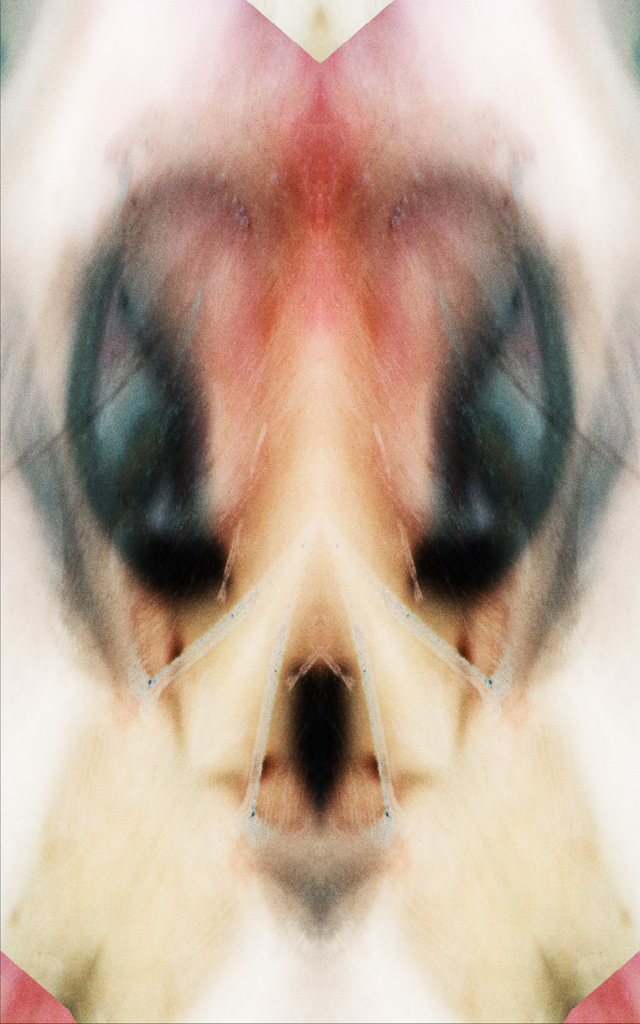
The photo shows a section of a human face – digitally transformed into an insect-like being.

Has it been shown before?

No.

What are your biggest influences?

My history of mental illnesses and my connectedness with animals.

Categories
The Ballery

Mara Wagenführ

Artist Interview: Mara Wagenführ

What is your background? Perhaps you could briefly introduce yourself and your practice?

I studied painting at the UDK and since then I am active as an artist; with a focus on mixed media paintings, textile work (such as embroideries) and installations.  The human body, in the context of the self portrait, as a portal between the personal inner life and the external events is the central topic of my work, always guided by the question of the meaning of our existence and an investigation on a religious, poetic and romantic level.

Have you shown any work at The Ballery before? 

Not yet – I am really looking forward to being part of the group show.

What made you apply for this call?

I have been following the gallery program for quite a while and somehow this felt like the right moment to do it.

Why did you choose to submit the work that you did?

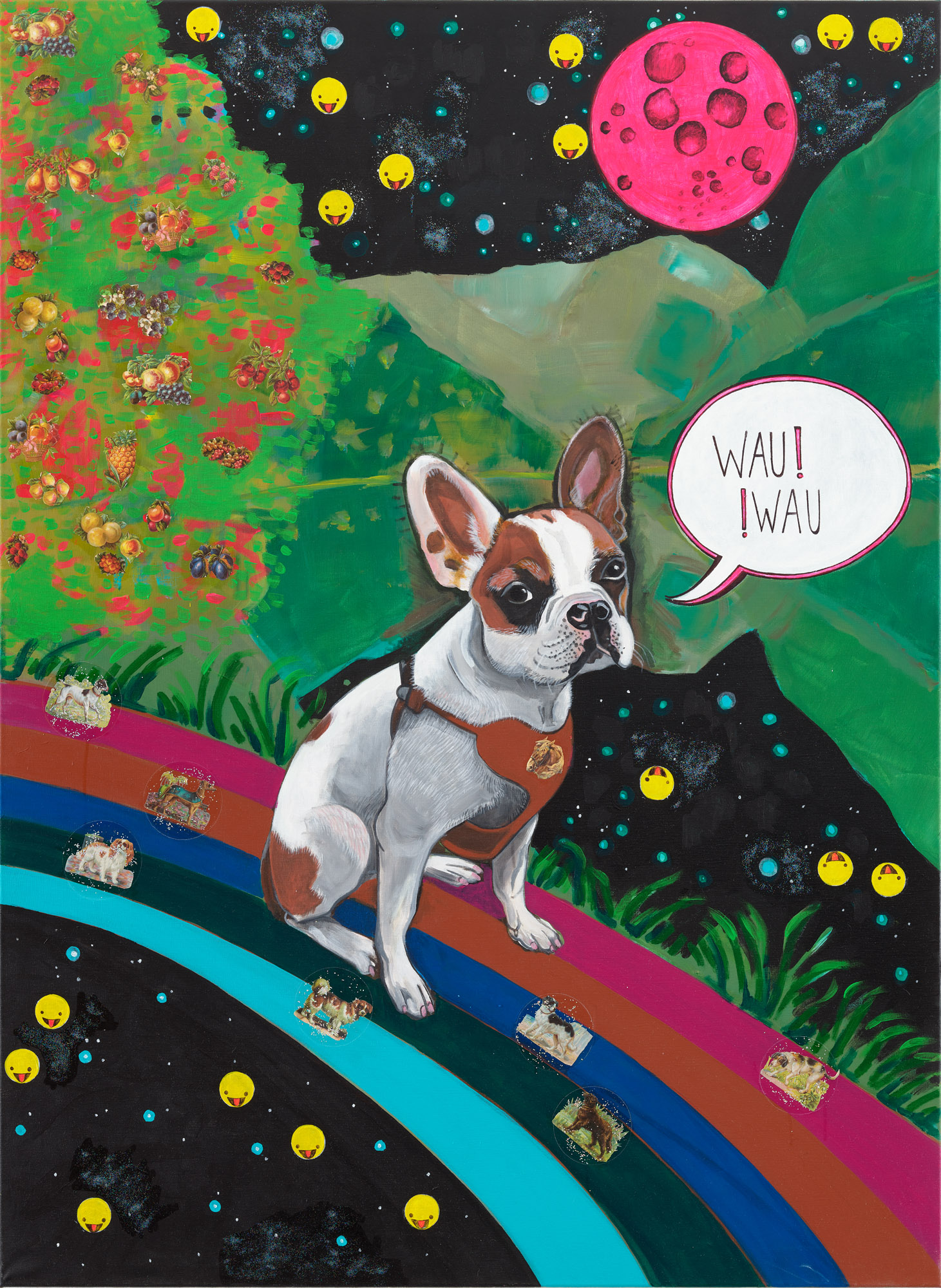
Actually I was applying with some other work, but Simon asked me if ‘Wau Wau’, the painting I will show is also available.

Can you tell us a bit about this work?

It’s a portrait of my dog Willi who became part of my life 2 years ago and is really a heart opener to me. So somehow it is also a self portrait.The title is Wau Wau or: the unbearable lightness of being, which refers to the idea of being in the present moment. 

Has it been shown before?

No.

What are your biggest influences?

Music is a big influence as well as practicing Yoga, which has created a change in my thinking about what is really important in life.

Categories
The Ballery

Koywe Kollage

Artist Interview: Koywe Kollage

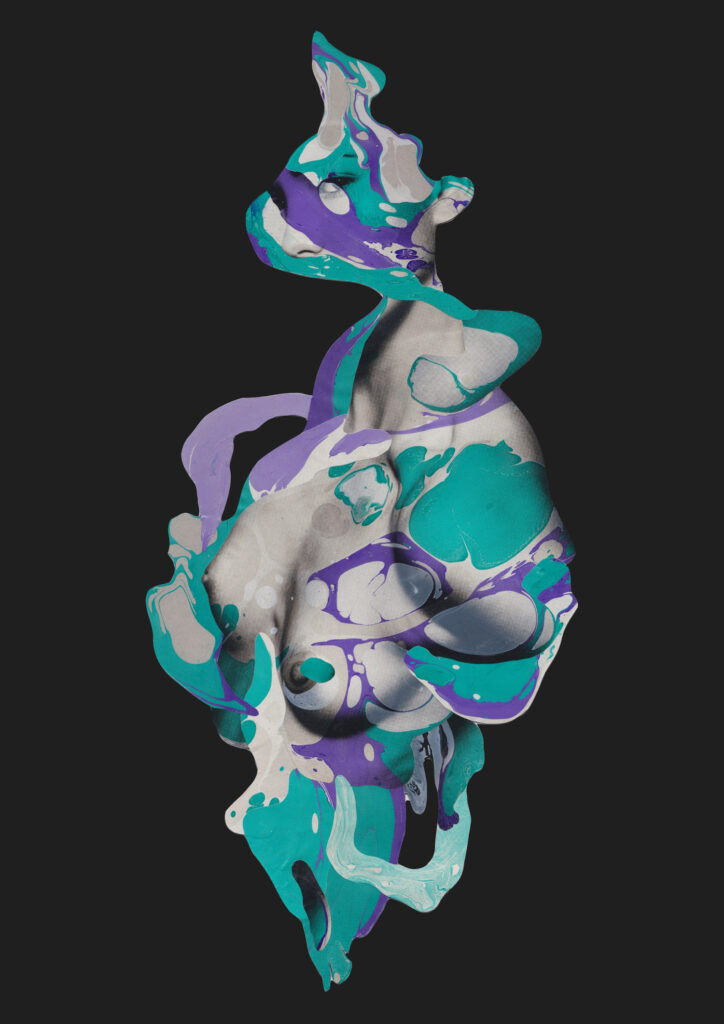
Today we are also sharing an interview with Koywe Kollage, who is showing the work ‘BIA 1’, a mixed media analog collage, at the first of the Pop-Up Shows opening this Friday. 

What is your background? Perhaps you could briefly introduce yourself and your practice?

I´m a mixed media and analog collage artist from Chile, based in Berlin that goes by the name of “Koywe Kollage”. My collection of unique cut collages is based on the search for artistic expression through paper as the main working material.  

Have you shown any work at The Ballery before? 

Yes, I participated for the first time in 2019 with one of my collages that was sold on the day of the Vernissage. Then in 2020, I participated twice, showing a total of 5 pieces. 

What made you apply for this call?

As I am already familiar with the gallery, I know the kind of exhibitions you do and I really like the way you work, the kind of audience The Ballery attracts and the selection of artists you include. There is always a good atmosphere in the gallery. 

Why did you choose to submit the work that you did?

Every time I participate in the Open Calls of The Ballery, I like to show the versatility in my work and, although this work is not within my recurring themes, it has for me, a special energy and a message of empowerment that I wanted to share with the friends of The Ballery. 

Can you tell us a bit about this work?

The name of this piece is BIA 1 and it’s part of a series of three mixed media analog collages called “BIA IN THREE SKINS – The personification of force and raw energy in different bodies”

The inspiration and name for the series come from Greek mythology. In ancient Greek: Βία, means “power, force, might” and it was the female personification of strength, anger, and raw energy.

I’m channeling and embracing this powerful feminine invisible energy represented in abstract portraits.

Each work begins with naked body b&w photographs that serve as a blank canvas that later, with the addition of paint floating in the water, absorbs and captures the tonalities and movement of that paint, simulating an invisible energy that emerges and floats in the darkness.

Has it been shown before?

It hasn’t been shown live yet, but I have already posted it on my Instagram account and website. 

What are your biggest influences?

My greatest influence comes from what inspires me, such as nature, the human body, sex, queerness, and how they relate to each other and coexist in this world. I try to portray that which surrounds us yet is non-visible and intangible as abstracts, likening it to the universal energy with which we coexist and which we also emit.